All Categories
Featured
Table of Contents
That liberates money in the brief term, and you might have 3 to four years to save toward the negotiation quantity. Very hazardous to credit rating scores, mainly as a result of missed repayments and an adverse "cleared up" mark that can remain on your credit scores record for up to 7 yearsMay be only choice if various other options (financial obligation loan consolidation, balance transfer credit history cards, debt mercy) aren't possibleTypically needs a fee to the 3rd party, which could counter some or every one of the financial savings from financial debt settlementMay aid you avoid bankruptcy if you've missed several paymentsNot all lenders deal with financial debt settlement firms Financial obligation forgiveness may be best for you if you are experiencing a financial challenge that makes it virtually impossible to pay down your financial obligation balances.
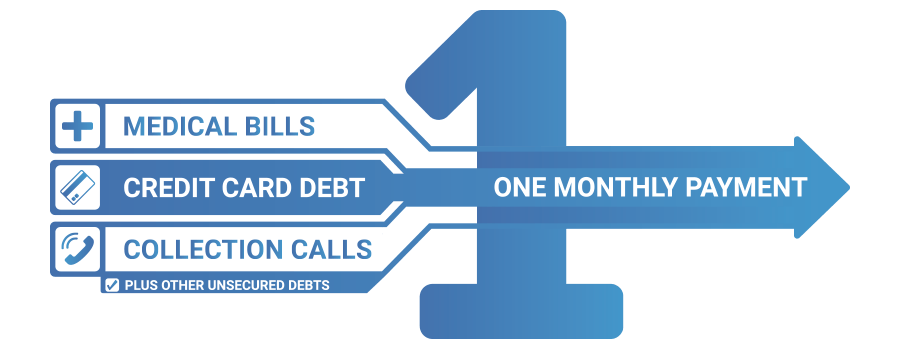
With a DMP, you make one regular monthly payment to the debt counseling agency. Those funds are then dispersed to lenders of your unsafe financial obligations, such as charge card and installment fundings. The agency collaborates with your financial institutions to reduce rates of interest or waive costs, yet some financial institutions may refuse such giving ins.
It can help you pay down financial debt if you're able to safeguard a car loan price that's reduced than the typical price of the accounts you're consolidating. You should avoid from racking up debt on those freshly gotten rid of accounts or your financial obligation might grow even greater.
These cards frequently use a 0% interest initial duration of up to 21 months. That provides you a lot of time to remove or substantially lower your equilibrium while making interest-free repayments. For some individuals facing insurmountable financial obligation, insolvency might be the only method to stop collection procedures and legitimately resolve their financial obligations.
All about Staying Away From the Same Patterns After Debt Relief
You may require it if your financial institution or a collection company ever before tries to gather on the debt in the future. When a lending institution forgives $600 or even more, they are required to send you Type 1099-C.
Financial debt forgiveness or negotiation virtually always injures your credit score. Anytime you resolve a debt for much less than you owe, it may look like "settled" on your debt report and affect your credit score for 7 years from the date of negotiation. Your credit score can also drop substantially in the months causing the forgiveness if you drop behind on repayments.
The Ultimate Guide To Mandatory Paperwork for Bankruptcy Counseling
This circumstance commonly results from underreporting earnings, not submitting returns on time, or discrepancies discovered throughout an Internal revenue service audit. The consequences of gathering tax financial debt are significant and can include tax obligation liens, which provide the IRS a lawful claim to your residential property as security for the debt.
Higher rate of interest on available credit history. Earnings and Financial institution Accounts IRS can levy (confiscate) salaries and savings account to please the financial obligation. Decreased revenue and disturbance of essential financial processes. Home Seizure In severe instances, the IRS can seize and offer residential property to cover the financial debt. Loss of valuable assets and potential variation.
Social Stigma Dealing with legal activity from the Internal revenue service can bring social preconception. Employment Opportunities A bad credit rating rating due to exhaust debt can limit work possibilities. Federal government Advantages Tax financial debt might affect qualification for government benefits, such as Social Safety and Medicaid.
Calculating Fees for Bankruptcy Counseling - The Facts
The OIC thinks about numerous aspects, consisting of the taxpayer's revenue, costs, asset equity, and ability to pay. Efficiently discussing an OIC can be complicated, needing a detailed understanding of the IRS's guidelines and a strong disagreement for why your offer lines up with your capacity to pay. It's crucial to note that not all applications are accepted, and the procedure calls for comprehensive economic disclosure.
The internal revenue service evaluates your overall economic circumstance, including your earnings, expenses, asset equity, and capacity to pay. You have to additionally be existing with all filing and payment requirements and not be in an open bankruptcy proceeding. The internal revenue service additionally considers your compliance history, assessing whether you have a document of timely filing and paying tax obligations in previous years.
Top Guidelines Of How to Not Fall Into the Old Patterns After Your Fresh Start
The application process for a Deal in Compromise entails numerous comprehensive actions. First, you have to complete and submit internal revenue service Kind 656, the Offer in Compromise application, and Form 433-A (OIC), a collection info statement for individuals. These kinds require extensive economic details, including details concerning your income, financial debts, expenditures, and possessions.
Back taxes, which are unpaid taxes from previous years, can dramatically enhance your total internal revenue service financial debt otherwise resolved without delay. This financial obligation can accrue interest and late settlement fines, making the initial amount owed much larger in time. Failure to pay back tax obligations can lead to the internal revenue service taking enforcement activities, such as releasing a tax lien or levy versus your residential or commercial property.
It is necessary to resolve back tax obligations asap, either by paying the full quantity owed or by arranging a payment strategy with the internal revenue service. By taking positive steps, you can stay clear of the accumulation of additional rate of interest and penalties, and avoid a lot more hostile collection actions by the internal revenue service.
One usual factor is the idea that the taxpayer can pay the total either as a lump amount or with a layaway plan. The internal revenue service also thinks about the taxpayer's earnings, expenses, asset equity, and future earning potential. If these aspects show that the taxpayer can afford to pay greater than the provided amount, the internal revenue service is most likely to turn down the offer.
5 Simple Techniques For Regional Resources That Offer Debt Relief
It is critical to supply precise and total details in your application and to talk to a tax obligation specialist to improve the chances of acceptance. Managing IRS financial debt can be complex and challenging. Tax obligation specialists, such as CPAs, tax obligation attorneys, or enrolled agents, can give invaluable help. They have the knowledge to navigate the details of tax obligation regulation and internal revenue service treatments.

Latest Posts
What Does First Consultation and What to Expect Mean?
What Legislation Says According to State Law Things To Know Before You Buy
About Steps to Take Following Debt Forgiveness